
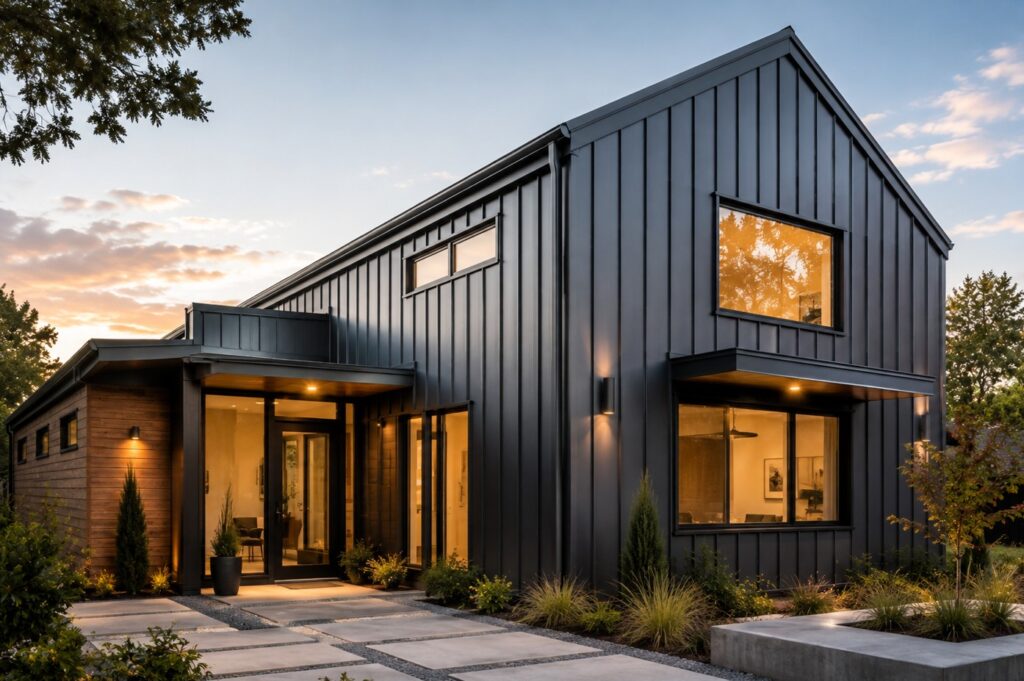
Modern home design is often defined by clean lines, carefully chosen materials, restrained colours, and a strong relationship between indoor and outdoor spaces. While windows, doors, landscaping, and interior finishes receive plenty of attention, exterior cladding has an equally important influence on the overall character of a property.
Metal siding panels have moved well beyond their traditional association with agricultural and industrial buildings. Contemporary residential systems are available in standing seam, board-and-batten, corrugated, shiplap, lap-style, and other architectural profiles, giving homeowners considerably more design flexibility.
Used thoughtfully, metal can make a house look refined, contemporary, and distinctive. Used without considering proportion, colour, surrounding materials, and architectural style, however, it can easily overwhelm the design.
Getting the look right is therefore less about covering a house in metal and more about understanding how metal fits into the complete visual composition.
Why Metal Siding Works So Well With Modern Architecture
Modern architecture tends to favour clarity. Rather than relying heavily on decorative details, the building’s shape, proportions, windows, and materials create visual interest.
Metal fits naturally into this approach.
Standing seam panels, for example, create strong uninterrupted lines with relatively little visual clutter. Vertical installations can emphasise height, while horizontal profiles can visually stretch the building and produce a more traditional residential character.
The material also works particularly well with simple geometric forms. A rectangular extension, pitched contemporary home, garden studio, or modern farmhouse can gain definition from the repeating rhythm of metal panels.
That does not mean metal siding should be restricted to ultra-modern houses. With the right profile and colour, it can also complement traditional and transitional properties.
Choose the Right Panel Profile First
One of the biggest design decisions involves the panel profile.
Not all metal siding panels create the same effect.
Standing seam panels feature relatively flat surfaces separated by raised seams. They are particularly effective when the goal is a clean, minimalist exterior. Concealed-fastener standing seam systems can produce an especially streamlined appearance because visible fixing points do not interrupt the surface.
Corrugated panels create more texture. Their repeating ridges generate stronger shadows throughout the day, giving otherwise simple walls additional depth.
Board-and-batten metal siding offers another option. It takes inspiration from traditional timber cladding but recreates the vertical rhythm in metal. This can work particularly well for modern farmhouse and contemporary rural architecture.
Lap and shiplap-style metal siding can create a more familiar residential appearance, making them useful when homeowners want metal’s practical characteristics without an obviously industrial aesthetic.
Before choosing a profile, think about the architectural character you want to reinforce rather than selecting whichever panel looks most impressive in isolation.
Think Carefully About Vertical vs Horizontal Lines
Panel direction can noticeably change how a building appears.
Vertical siding draws the eye upward. This can make a single-storey house appear taller and give the exterior a strong contemporary rhythm.
It is particularly effective on narrow elevations, gables, entrances, and taller architectural sections.
Horizontal siding produces a different effect. The eye follows the lines across the building, which can emphasise width and create a calmer, more conventional residential appearance.
You do not necessarily have to choose one orientation for the entire property.
Combining orientations can create subtle visual zoning. For example, horizontal panels could cover the main building while vertical siding distinguishes an entrance or extension. Contemporary residential designs sometimes use changes in panel orientation specifically to add visual interest without introducing additional materials.
The important word is subtle. Too many changes in direction can make an otherwise clean design feel unnecessarily complicated.
Avoid Using Too Much Metal
Metal siding can be visually powerful.
That strength means homeowners should resist the temptation to use it everywhere simply because they like the material.
A completely metal-clad house can look striking when the architecture has been specifically designed around it. On many existing properties, however, selective use produces a more balanced result.
Consider using metal to highlight one section of the building.
It could frame an entrance, distinguish an upper floor, cover a new extension, define a garden-facing elevation, or create contrast around a large window.
The remaining exterior might use timber, brick, stone, render, or another complementary finish.
This approach allows the metal to become an architectural feature rather than simply another surface covering.
Combine Metal With Natural Timber
Metal and timber create one of the most effective material combinations in contemporary residential design.
Metal introduces precision and crisp lines. Timber adds warmth, grain, and natural variation.
When placed together, each material helps balance the other.
Dark metal siding paired with warm timber around an entrance can prevent the exterior from feeling too severe. Similarly, timber soffits beneath a metal-clad upper floor can introduce warmth without compromising the clean architectural character.
You do not need large quantities of timber to achieve this effect.
A timber front door, garage door, privacy screen, porch ceiling, or small section of cladding may provide enough contrast.
Try to keep the number of timber tones limited. Mixing several different wood colours alongside metal can quickly make the exterior look busy.
Pair Metal With Brick for a Modern Update
Brick homes can also benefit from metal accents.
Instead of removing an existing brick exterior, homeowners renovating an older property may be able to introduce metal siding on a new extension, upper floor, entrance, or other architectural feature.
The contrast between the materials can be attractive because brick provides texture and visual weight while metal introduces cleaner lines.
Colour becomes particularly important.
Dark charcoal or black panels can work well with many red and brown bricks, while softer grey, bronze, or neutral metal finishes may complement lighter masonry.
Look closely at the undertones within the existing brick before selecting a finish. A metal colour that appears neutral on a small digital image may look noticeably warmer or cooler when placed beside a large masonry wall.
Use Stone to Add Weight and Texture
Stone provides another useful counterpoint to metal.
Metal surfaces can appear smooth and precise, while stone is naturally irregular. Combining the two can create a contemporary exterior that still feels connected to its surroundings.
Stone is often most effective at ground level, where its visual weight can help anchor the house. Metal can then be used above or across selected architectural volumes.
Again, restraint matters.
If you already have metal, stone, large areas of glazing, timber, and multiple exterior colours competing for attention, the design can become fragmented.
For most houses, a smaller palette of well-coordinated materials produces a more convincing result.
Get the Colour Right
Colour has a major influence on whether metal siding feels sophisticated or overly industrial.
Charcoal, black, bronze, deep grey, muted green, off-white, and other restrained shades are commonly associated with contemporary residential architecture. Modern coated metal systems are available in a broad selection of colours and finishes.
Dark siding can produce dramatic results, particularly when paired with large windows and warm natural materials.
But black is not automatically the best choice for every modern house.
A softer grey can reduce contrast. Muted green may help a rural property blend with surrounding vegetation. Warm bronze can complement timber particularly well, while lighter shades can create a cleaner and less imposing appearance.
Consider the roof, window frames, doors, paving, fencing, and neighbouring materials before making the final decision.
Always Look at Physical Samples
Choosing exterior colours from a computer screen is risky.
Painted metal can look different depending on sunlight, shade, weather conditions, surrounding materials, and viewing angle. Dark finishes can be particularly sensitive to changing light.
Whenever possible, obtain physical samples before ordering the complete siding system. Metal panel suppliers themselves commonly recommend assessing real finish samples because digital representations may not accurately show how the material will appear under actual project lighting.
Take samples outside and position them against existing brick, timber, stone, roofing, and window frames.
Check them in the morning, afternoon, and evening.
A colour that looks perfect beneath showroom lighting may feel completely different across an entire sunlit elevation.
Match the Siding With Your Windows
Windows are among the strongest visual elements on a modern façade.
For that reason, siding and window design should be considered together.
Dark-framed windows paired with dark metal siding can create a seamless appearance where the glass becomes the primary visual feature.
Alternatively, contrasting window frames can provide definition. Light frames against charcoal metal, for example, create a much stronger graphic effect.
The placement of panel seams around windows also deserves attention.
Poorly planned cuts and awkward narrow panel sections can undermine an otherwise sophisticated design. On high-end projects, designers often coordinate panel layouts with windows, doors, corners, and other architectural features so the exterior lines feel intentional.
This level of planning can make the difference between metal siding that looks merely functional and a façade that feels architecturally resolved.
Pay Attention to Corners and Trim
The main panels usually receive the most attention during the selection process, but corners and transitions have an enormous impact on the finished appearance.
Metal siding systems require appropriate detailing around corners, windows, doors, bases, roof intersections, and other transitions. Matching trim pieces are an important part of creating a cohesive result.
For minimalist architecture, bulky or poorly coordinated trim can disrupt clean lines.
Discuss these details with the installer before construction begins.
Ask how external corners will be finished. Look at how panels will terminate around doors. Consider how gutters, downpipes, exterior lights, vents, and utility boxes will interact with the siding.
Small details become surprisingly noticeable against a simple modern façade.
Create a Stronger Indoor-Outdoor Connection
Exterior design does not have to exist separately from interior design.
Modern homes often use large windows and glazed doors to visually connect living rooms, kitchens, bedrooms, and dining spaces with gardens and terraces. The exterior material becomes part of the view from inside.
This creates an opportunity for subtle coordination.
A house with charcoal metal siding might repeat dark accents through interior window frames, lighting, furniture, or cabinetry.
Warm timber used beside the metal outside could appear again in flooring, fitted storage, shelving, or furniture.
There is no need to make the interior and exterior identical. Instead, repeat a few colours or materials to create visual continuity.
This makes the transition from inside to outside feel intentional.
Use Landscaping to Soften Dark Metal
One concern homeowners sometimes have is that metal siding will make a property feel cold.
Landscaping can change that dramatically.
Green planting creates natural contrast against charcoal, black, grey, and other darker finishes. Ornamental grasses can soften strong vertical lines, while trees and shrubs introduce irregular shapes beside the precise geometry of the panels.
Timber planters, stone pathways, gravel, and textured paving can further reduce any industrial feeling.
Think about how the landscaping will look several years after installation rather than only on the day the siding is completed.
As planting matures, it can significantly change how the architecture feels within its surroundings.
Consider Texture, Not Just Colour
Two metal panels in exactly the same colour can create very different effects depending on their profile.
A nearly flat standing seam surface can look restrained and architectural.
Deep corrugations produce stronger shadow lines and more obvious texture.
Board-and-batten profiles create a repeating vertical pattern that can reference traditional residential architecture while retaining the performance characteristics of metal.
Think about the amount of texture already present elsewhere.
If the house includes rough stone and heavily textured brick, a relatively simple metal profile may provide useful visual relief.
On an extremely minimal property with smooth render and large glass surfaces, a more pronounced metal profile might add needed depth.
Balance is usually more effective than making every material highly textured.
Understand That Metal Siding Is Part of a Wall System
Appearance is important, but siding must also perform as part of the building envelope.
Metal panels should not simply be treated as a decorative skin attached without considering what happens behind them.
Depending on the system, the wall assembly may include sheathing, a weather-resistant barrier, drainage provisions, insulation, furring, flashings, and other components. Metal siding guides emphasise that the panels themselves are part of a wider cladding system and require appropriate moisture-management detailing behind and around them.
The exact construction depends on the product, climate, wall design, and applicable building requirements.
For homeowners, the key lesson is simple: ask about the complete wall assembly, not only the visible panels.
Don’t Ignore Weather and Local Climate
Exterior materials experience very different conditions depending on location.
Coastal properties may need particular attention to corrosion resistance and compatible fasteners. Homes in areas with strong sunlight need finishes suitable for prolonged UV exposure. Cold climates introduce freeze-thaw conditions, snow, and ice, while windy areas require appropriate fastening and detailing.
Metal siding itself is known for resistance to rot, insects, and many forms of weather-related deterioration, but performance still depends heavily on choosing the appropriate system and installing it correctly.
The manufacturer’s recommendations should therefore be considered alongside local building requirements and the experience of a qualified installer.
Understand the Maintenance Requirements
One reason homeowners consider metal siding is relatively low maintenance.
Steel does not experience the same rot or insect damage associated with some organic materials, and quality factory finishes can remain serviceable for many years.
Low maintenance does not mean no maintenance.
Exterior walls should still be inspected periodically. Dirt and environmental deposits may need cleaning, particularly in sheltered areas that receive little natural rainfall. Scratches, damaged coatings, dents, sealants, flashings, and connections should also be checked when appropriate.
Coastal and highly humid environments may require additional attention.
Following the siding manufacturer’s maintenance instructions is the safest approach because recommendations vary by material and finish.
Proper Installation Is Essential to the Finished Look
Even premium metal siding panels can look disappointing when poorly installed.
Long straight seams make inconsistencies easy to notice. Misaligned panels, uneven gaps, damaged surfaces, awkward cuts, or poorly finished corners can become prominent visual defects.
Installation also affects performance.
Fine Homebuilding notes that installers should understand the specific siding product and profile because correct fastening, movement allowances, flashing, and spacing are important to long-term durability.
Metal architectural work can require specialist cutting, bending, flashing, and handling skills. Panels can also be dented or bent during transport and installation if they are handled carelessly.
For design-focused residential projects, contractor experience with architectural metal cladding is particularly valuable.
Avoid Following Trends Too Closely
Exterior cladding is a long-term decision.
A sofa can be replaced relatively easily. Re-cladding an entire house because a fashionable colour has quickly begun to feel dated is much more expensive.
For that reason, use trends as inspiration rather than strict rules.
Matte black may suit the architecture beautifully, but do not choose it simply because it appears frequently in contemporary design photography.
Ask whether the colour works with the building’s shape, setting, roof, windows, landscaping, and surrounding homes.
Neutral finishes and simple profiles generally provide more flexibility if other exterior elements change later.
Decide Where Metal Will Have the Most Impact
You do not need to use metal across every wall to make it a defining feature.
Sometimes one carefully selected area is enough.
A metal-clad entrance can establish a strong first impression. An extension can be deliberately differentiated from an older part of the house. A vertical section between large windows can create rhythm. Metal around an upper storey can contrast effectively with masonry below.
Selective use also allows homeowners to invest in a premium siding product while controlling the overall project budget.
Before finalising the design, view the house elevation as a whole and identify where the eye naturally goes.
That is often where the strongest material deserves to be placed.
Bringing the Whole Exterior Together
Getting metal siding right is ultimately about coordination.
The panel profile needs to suit the building’s proportions. The colour should work with the roof, windows, doors, and surrounding landscape. Other materials should provide enough contrast without creating unnecessary visual competition.
Just as importantly, practical elements such as flashings, corners, moisture management, fasteners, and installation quality need to support the architectural concept.
Modern metal siding panels provide considerably more design flexibility than the industrial cladding many homeowners still associate with metal. Contemporary systems can create minimalist standing-seam façades, modern farmhouse exteriors, textured architectural features, or subtle accents alongside timber, brick, stone, and glass.
The most successful homes rarely depend on one dramatic material alone. Instead, every element contributes to a consistent design language.
Choose metal because it complements the architecture, use it where it has the greatest visual impact, and pay attention to the details surrounding it. Done well, metal siding can give a home a crisp contemporary identity while still feeling warm, balanced, and inviting.