

Natural materials have anchored home design for centuries, and with good reason. Cotton and wool textiles wrap rooms in warmth and quiet comfort. Wood and stone such as oak, granite, and marble withstand decades of daily use without losing their character.
Beyond aesthetics, these materials quietly improve how a home functions. They breathe better than synthetics, filtering air rather than trapping pollutants. Choosing them also means stepping away from resource-heavy manufacturing, a small but meaningful shift toward sustainable living.
The real craft lies in selection. Each room demands something different: moisture resistance in kitchens, softness in bedrooms, resilience in high-traffic halls.
Understanding where each material thrives and where it struggles prevents costly missteps.
Blending them well takes restraint. Too many competing textures or tones create restlessness rather than harmony. The goal is dialogue between materials, not competition, letting each element speak without shouting over the others.
The Health, Durability, and Environmental Case for Natural Materials
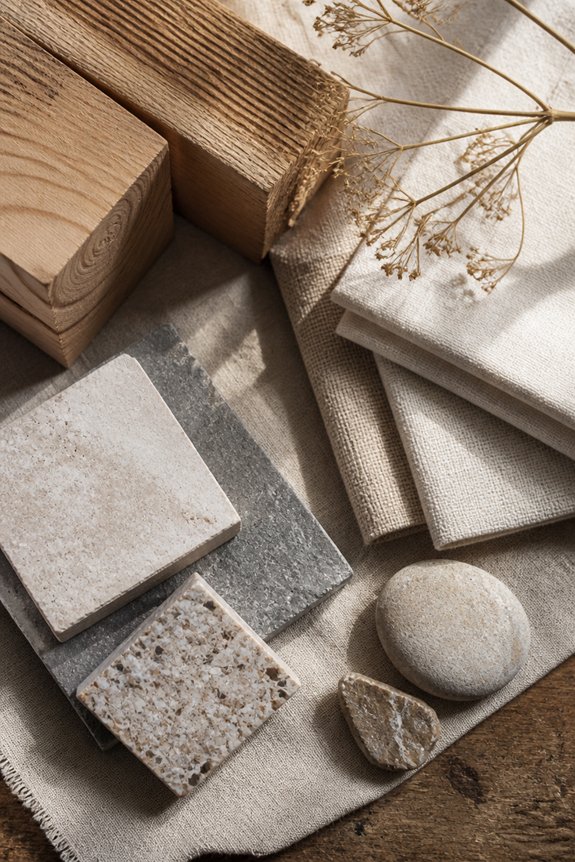
When selecting materials for home interiors and furnishings, natural options like wood, stone, cotton, wool, and linen offer measurable advantages across three key areas: human health, product longevity, and environmental impact.
Natural materials emit fewer volatile organic compounds than synthetic alternatives, reducing indoor air pollution and respiratory irritation. Stone and wood resist degradation, lasting decades with basic maintenance, while synthetic fabrics deteriorate quickly.
Environmentally, these materials biodegrade or require minimal processing compared to plastics and petroleum-based products. Wood sequesters carbon, stone requires extraction but no chemical treatment, and plant fibers grow renewably. These characteristics make natural materials practical choices for durable, healthier living spaces with reduced ecological footprints.
The Warmth and Longevity of Wood: Why It’s Worth the Investment
Because wood combines aesthetic appeal with practical durability, it stands as a superior choice for interior applications from flooring to furniture. Hardwoods like oak, maple, and walnut resist wear, lasting decades with proper maintenance.
Wood naturally insulates spaces, retaining warmth and reducing energy costs. Unlike synthetic materials, wood ages gracefully, developing character through use.
Initial investment costs prove reasonable when accounting for longevity: hardwood floors typically outlast carpet by 25 years. Wood also improves indoor air quality by regulating humidity. Regular sealing and refinishing extend lifespan further, making wood economically sensible for long-term home investments.
Why Stone Outlasts Every Other Building Material
Stone materials, granite, marble, limestone, and slate, demonstrate remarkable permanence in building applications. These materials resist weathering, erosion, and decay over centuries, unlike wood or textiles that deteriorate faster.
Granite withstands extreme temperatures and chemical exposure. Marble maintains structural integrity in protected environments. Limestone adapts to various climates but requires occasional maintenance. Slate offers superior durability in roofing and flooring applications.
Stone’s density and mineral composition prevent water absorption, rot, and pest damage that affect organic materials. Buildings constructed with stone foundations and exteriors regularly last 500 years or longer with minimal intervention.
Layering Texture and Comfort With Natural Textiles
Natural textiles, cotton, wool, linen, and silk, provide functional layers that enhance both comfort and aesthetic appeal in interior spaces. Cotton rugs offer durability and easy maintenance, while wool adds warmth and sound absorption. Linen curtains filter light effectively and age gracefully. Silk cushions introduce subtle sheen and softness to seating areas.
Layering these materials through throws, upholstery, and wall hangings creates depth and visual interest. Different textures balance each other; smooth silk paired with nubby wool creates contrast. These natural fibers regulate temperature, reduce static, and support indoor air quality compared to synthetic alternatives.
Matching Materials to Your Kitchen, Bathroom, Bedroom, and Living Spaces
While natural textiles form the foundation of comfortable interiors, the specific materials chosen for each room depend on function, moisture levels, and daily use patterns.
Kitchens benefit from durable, washable materials like linen blends and stone countertops that resist staining and heat. Bathrooms require moisture-resistant options such as teak wood, sealed stone, and quick-drying cotton textiles.
Bedrooms prioritize comfort through soft linens, wool blankets, and natural fiber rugs. Living spaces combine varied materials, mixing wood furniture, stone accents, and layered textiles to balance durability with aesthetic appeal. Each room’s material selection directly supports its primary activities and environmental conditions.
Protect Your Investment: Seasonal Care and Cleaning for Each Material
Because natural materials respond differently to temperature, humidity, and seasonal changes, each requires tailored maintenance schedules throughout the year. Wood needs regular conditioning in dry seasons to prevent cracking, while stone benefits from sealing before winter moisture arrives. Textiles demand careful storage in cool, dry spaces during off-seasons, protected from dust and pests.
Spring cleaning should address accumulated debris on all surfaces. Summer heat may require increased ventilation for wood pieces. Fall preparation involves inspecting grout lines and resealing tile. Winter poses risks from salt exposure and temperature fluctuations. Establishing material-specific routines prevents costly damage and extends durability markedly.
Mixing Wood, Stone, and Textiles Without Visual Clutter
Combining multiple natural materials in a single space requires deliberate choices about color, texture, and proportion to maintain visual balance. Limiting the wood tones to two or three prevents competition for attention. Stone surfaces work best as anchors, such as fireplace surrounds or flooring, rather than scattered accents.
Textiles should echo one dominant material’s color palette, linking disparate elements together. A wool rug in warm gray tones, for example, bridges light oak wood and limestone surfaces. Balancing busy textures with smooth ones prevents overwhelm. Grouping similar materials in distinct zones creates natural organization without visual fragmentation or excessive pattern layering.
Frequently Asked Questions
How Do I Budget for Natural Materials Compared to Synthetic Alternatives?
Natural materials typically cost more upfront than synthetics due to sourcing and processing expenses. However, they often provide superior durability and longevity, resulting in lower replacement costs over time. Budgeters should calculate lifetime value rather than initial price alone.
What Certifications Should I Look for When Purchasing Sustainable Natural Materials?
One should seek certifications such as FSC for wood, GOTS for textiles, and cradle-to-cradle for all materials. These verify environmental responsibility, ethical sourcing, and sustainable production practices throughout the supply chain.
Can Natural Materials Be Used in High-Moisture Areas Like Saunas?
Yes, certain natural materials can be used in high-moisture environments like saunas. Cedar and teak woods are naturally resistant to moisture and decay. Stone materials such as granite also withstand humidity well. However, proper ventilation and maintenance remain essential for longevity.
How Do I Repair Deep Stains or Damage in Natural Stone?
One could say fixing deep stone damage requires a million different approaches depending on severity. Professionals recommend poulticing for stains, sealing for protection, and polishing or honing for surface damage. For severe cases, stone replacement or professional restoration becomes necessary.
Are Natural Materials Suitable for Homes With Pets and Children?
Natural materials can work in pet and child-friendly homes, though they require thoughtful selection. Stone offers durability and easy cleaning, while wood needs protective finishes. Textiles demand stain-resistant treatments. Proper maintenance and sealing enhance their longevity in active households.
Conclusion
Natural materials—wood, stone, textiles—form the foundation of durable, healthy homes. Like layers of sediment building geological strength, these materials stack functionality with longevity, each protecting and complementing the others. Wood ages gracefully, stone resists time’s erosion, textiles soften spaces. Together, they create interiors that breathe, sustain indoor air quality, and reduce environmental impact. Proper seasonal maintenance preserves their investment value, ensuring these materials remain steadfast anchors in living spaces for decades.