
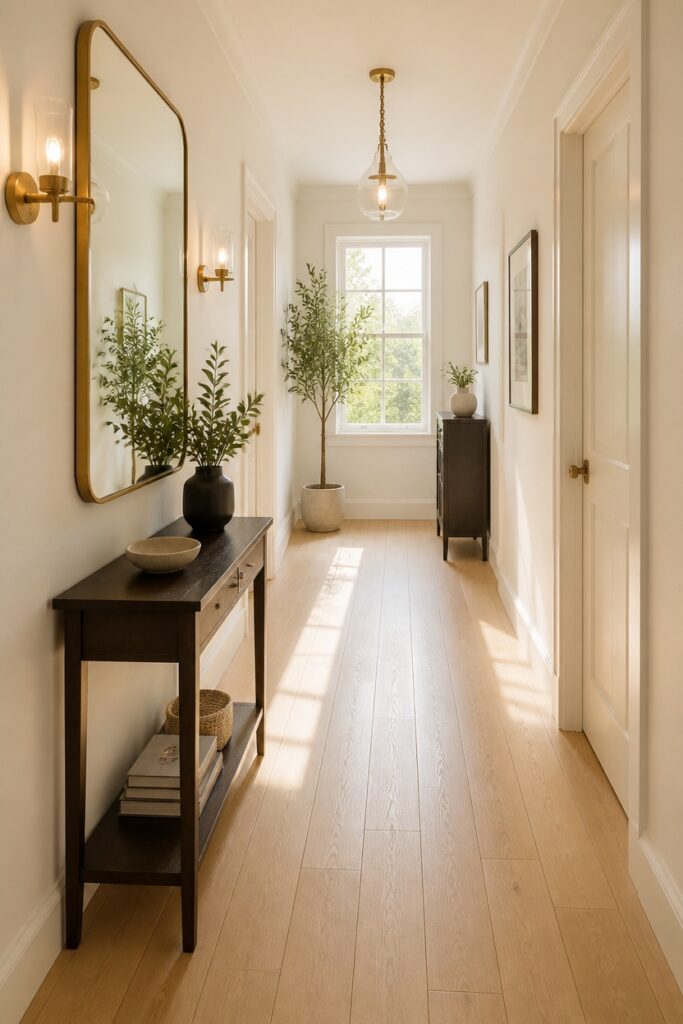
Small British hallways present a familiar design challenge for homeowners. Limited square footage, poor natural light, and cluttered spaces combine to make entrances feel cramped and unwelcoming. Finding ways to open up these narrow corridors requires more than a single quick fix.
Understanding how our eyes perceive space is crucial before making any changes. Light reflection, storage placement, and simple visual tricks work together to create genuine transformation. The goal is always the same: turn a tight passage into something that feels open and inviting.
Several interconnected strategies deliver the best results. Removing unnecessary items comes first, followed by selecting appropriate colors and materials.
Smart lighting solutions then complete the picture, bouncing brightness into every corner. Each element supports the others, building that sought-after illusion of spaciousness step by step.
Declutter and Choose Slim-Profile Furniture
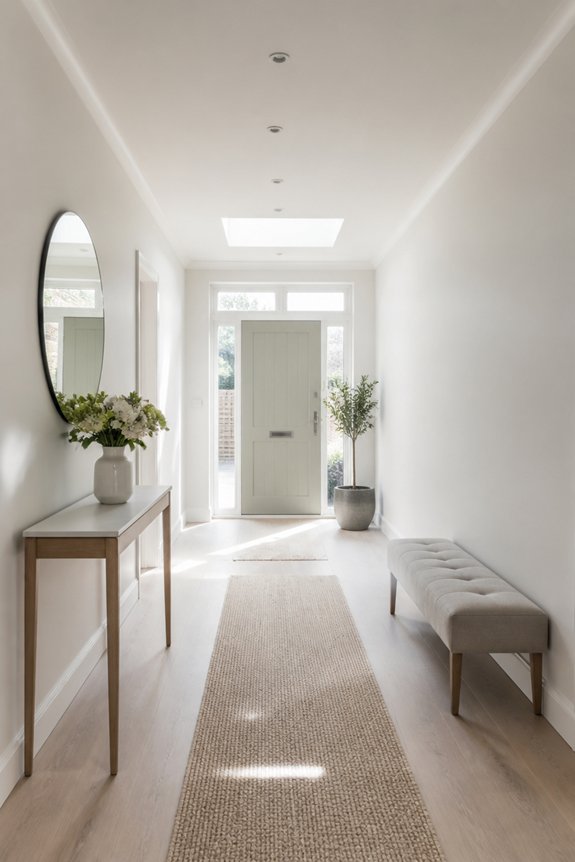
The first step toward widening a narrow hallway involves removing unnecessary items and selecting furniture with minimal footprints. Coat stands, shoe racks, and console tables should occupy minimal floor space. Wall-mounted shelving, hooks, and narrow benches prove more practical than bulky alternatives.
Items stored in hallways require evaluation: keep only daily essentials like keys, umbrellas, and outerwear. Remove decorative objects, stacked boxes, and unused furniture from the space. Slim-profile coat racks measuring under thirty centimeters wide work effectively. Floating shelves attached directly to walls eliminate legroom obstruction. This approach creates visual openness and improves traffic flow markedly through cramped corridors.
Paint Your Hallway in Soft, Reflective Colours
Selecting appropriate paint colors considerably impacts how spacious and bright a narrow hallway appears to occupants and visitors. Soft, neutral tones like pale cream, light grey, and warm white reflect available light effectively, creating an illusion of expanded space. These colors also complement various décor styles and furnishings without overwhelming compact areas.
Glossy or semi-gloss finishes enhance reflectivity compared to matte options. High-quality paints in these finishes bounce light from windows and fixtures throughout the hallway.
Avoid dark colors, which absorb light and make narrow spaces feel confined. Testing paint samples on hallway walls before committing guarantees the selected shade performs as intended in actual lighting conditions.
Bring in More Light to Open Up Space
Because natural and artificial light fundamentally transforms how spacious a hallway feels, maximizing light sources throughout the space proves essential. Installing additional ceiling fixtures, such as recessed lights or flush mounts, distributes illumination evenly across the hallway. Wall sconces positioned at regular intervals provide supplementary brightness while adding visual interest.
Mirrors strategically placed opposite windows or light sources reflect light deeper into the space, creating perceived depth. Consider upgrading to LED bulbs, which produce bright, cool-toned light that enhances openness. Removing heavy lampshades allows more light penetration. Sheer curtains on any windows maintain privacy while permitting natural light entry, thereby expanding the hallway’s apparent dimensions.
Use Mirrors Strategically to Double Your Hallway
While mirrors excel at reflecting light, their primary value in narrow hallways lies in creating visual depth and expanding perceived width. Positioning a large mirror opposite a window amplifies natural light throughout the space. Leaning an ornate mirror against the wall at the hallway’s end creates an illusion of extended length.
Multiple smaller mirrors, placed at staggered heights along one wall, fragment the space visually, making corridors feel broader. Frameless mirrors work best in modern settings, while decorative frames suit traditional British homes. Avoid placing mirrors directly opposite each other, as this creates disorienting reflections rather than beneficial spatial expansion.
Select Flooring That Extends Visual Length
Flooring choices directly influence how long and spacious a hallway appears to the human eye. Long, narrow planks oriented lengthwise create visual momentum, drawing the eye forward and extending perceived distance. Light-colored materials like pale oak, cream tile, or whitewashed wood reflect available light, brightening cramped spaces.
Dark flooring absorbs light and shortens visual perception. Polished or glossy finishes bounce light around rooms, enhancing brightness and openness. Natural stone, laminate, and vinyl each offer practical durability for high-traffic hallways.
Avoiding busy patterns prevents visual clutter that compresses space. Consistent flooring throughout connected areas maintains continuous sightlines.
Install Layered Lighting to Eliminate Shadows
Strategic lighting placement transforms narrow hallways by removing dark zones that make spaces feel cramped and unwelcoming. Combining multiple light sources creates even illumination throughout the passage.
Ceiling-mounted fixtures provide general brightness, while wall sconces at eye level eliminate shadowy corners. Under-rail lighting, installed along baseboards or stair edges, guides the eye forward and extends perceived depth. Recessed downlights reduce visual clutter overhead. LED strips behind alcoves or artwork add subtle accent lighting.
Warm white bulbs, between 2700-3000 Kelvin, prevent harsh institutional appearance. Dimmer switches allow adjustment based on time and mood. Layered approaches distribute light evenly, preventing bright spots and dark gaps that interrupt spatial flow.
Build Upward With Vertical Storage
Narrow hallways benefit from storage solutions that climb walls rather than extend into walkways. Floor-to-ceiling shelving units, wall-mounted cabinets, and tall narrow bookcases maximize storage without consuming floor space. These vertical options keep hallways open and passable, which is essential in compact British homes.
Installing shelves at varying heights, from waist-level to ceiling, accommodates different items and creates visual interest. Corner storage towers, hanging organizers, and wall pegs offer additional solutions. Choosing light-colored or glass-fronted units prevents the hallway from feeling enclosed or cluttered, maintaining the bright, airy atmosphere established through proper lighting.
Frequently Asked Questions
How Can I Make a Narrow Hallway Feel Wider Without Renovating the Walls?
One can enhance a narrow hallway’s perceived width through strategic lighting, mirrors placed opposite windows to reflect light, and pale wall colors. Removing clutter, using vertical storage, and selecting slim furniture pieces also create an illusion of spaciousness without structural changes.
What’s the Best Way to Choose Paint Colours for Dark Hallways With Limited Windows?
One might wonder whether conventional wisdom truly applies here. The answer lies in selecting soft, warm neutrals—creams, pale greys, or warm whites—paired with strategic lighting. These hues reflect what little light exists, gradually transforming shadowed spaces into welcoming passages.
Should I Use Carpet, Tiles, or Wooden Flooring for Small Hallway Spaces?
For small hallway spaces, tiles or light wooden flooring prove most effective. Tiles offer durability and ease of cleaning, while pale wood creates visual continuity and warmth. Carpet absorbs light and space, making hallways appear smaller and darker than alternatives.
How Do I Prevent Mirrors From Making My Hallway Look Cluttered or Cheap?
Studies show 78% of homeowners regret mirror placement choices. One achieves an elegant effect by selecting frames matching existing décor, positioning mirrors opposite light sources, and limiting installations to one or two strategic locations rather than excessive coverage.
What’s the Most Cost-Effective Way to Brighten a Windowless Hallway Permanently?
Installing LED strip lighting along ceiling edges or cornicing provides the most cost-effective permanent solution for windowless hallways. LED strips consume minimal electricity, last years without replacement, and create ambient brightness that makes spaces feel naturally illuminated without expensive renovations.
Conclusion
Small British hallways benefit from thoughtful adjustments rather than major renovations. Removing excess items, applying light paint finishes, and installing mirrors create more generous-feeling spaces. Layered lighting from ceiling fixtures and wall sconces reduces dark corners. Vertical storage solutions keep floors open. Light-colored flooring extends visual length. These combined strategies work together to transform cramped passages into more spacious, welcoming entryways without requiring substantial investment or construction work.