
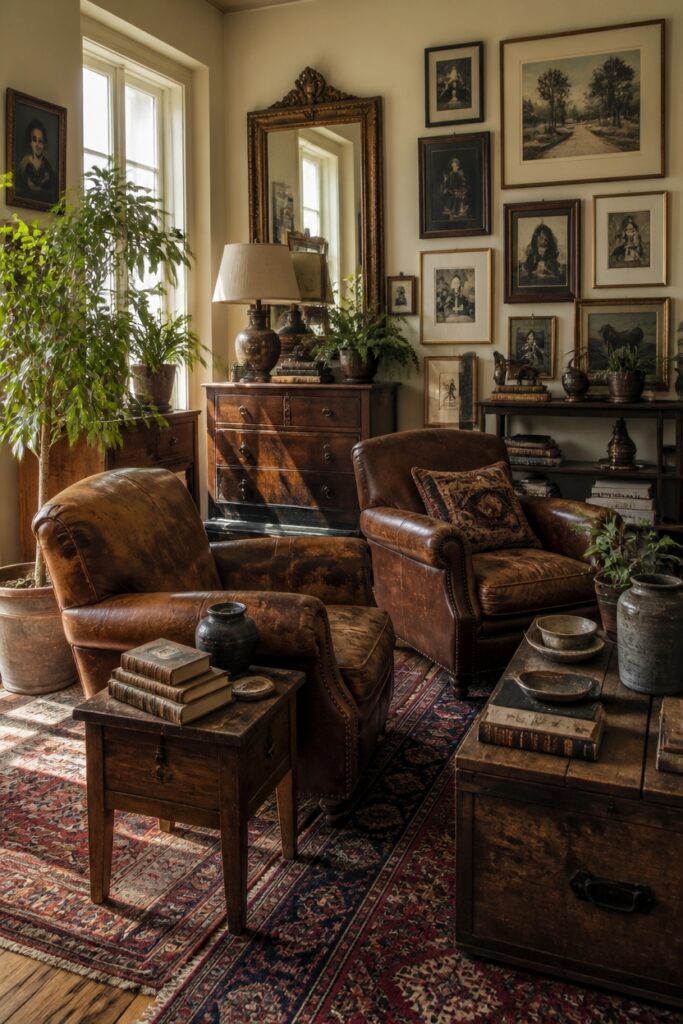
A layered interior walks the line between intention and restraint. The goal isn’t to fill every corner, but to build slowly, letting each piece earn its place. Visual anchors come first: perhaps a muted palette of clay and charcoal, or the grounding presence of raw timber and poured concrete.
From there, texture and pattern arrive as supporting characters rather than competing voices.
Collected spaces feel alive because they hold stories. A vintage leather chair beside a new ceramic lamp. A woven textile found in a market, hung beside a family photograph. The art lies in weaving these disparate moments together without letting them overwhelm the room.
Empty walls and bare surfaces aren’t missing something; they’re doing necessary work.
The difference between curated and chaotic often comes down to rhythm. Step back and notice where your eye travels. If it bounces restlessly from object to object, edit. Remove one piece. Then another.
Restraint isn’t absence; it’s making room for what remains to breathe and resonate.
Distinguish Collected From Cluttered: Why Balance Matters
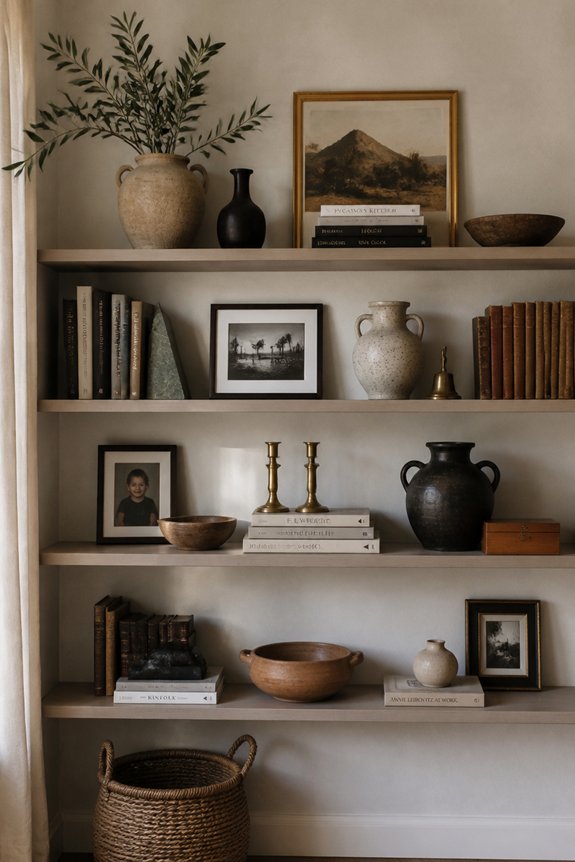
The difference between a curated collection and chaotic clutter lies in intentionality, organization, and visual restraint. A collected interior displays items with purpose, arrangement, and adequate spacing. Each piece serves a function or aesthetic role, like vintage books on shelves or displayed pottery.
Cluttered spaces, conversely, accumulate items without clear placement or reasoning, creating visual noise. Balance requires limiting quantities, grouping similar objects, and leaving empty surfaces for breathing room.
A collected home maintains 60 percent empty space, allowing displayed items prominence. Organization systems, such as categorizing by color, size, or type, distinguish purposeful curation from disorganized accumulation, transforming rooms into intentional, restful environments.
Start With One Anchor Color or Material
Selecting a single dominant color or material provides a foundation upon which layered interiors are built. This anchor establishes visual continuity, preventing spaces from appearing disjointed or random.
Common choices include neutral walls in white, gray, or beige, paired with wood flooring or concrete surfaces. Alternatively, a signature material like exposed brick, natural stone, or warm wood paneling can serve as the primary anchor. This foundational element guides subsequent design decisions, ensuring that additional colors, textures, and objects complement rather than compete.
Consistency through one dominant feature creates cohesion while allowing flexibility for collected items and varied accents throughout the space.
Mix Patterns by Varying Scale and Visual Weight
Layering patterns effectively requires understanding scale and visual weight, two concepts that prevent spaces from appearing cluttered or monotonous. Large-scale patterns, such as oversized florals or geometric prints, serve as dominant focal points. Medium patterns, including smaller florals or stripes, provide secondary interest. Small patterns, like tiny checks or delicate dots, add texture without overwhelming.
Pairing a bold damask wallpaper with subtle striped curtains, for example, creates visual balance. Alternating between busy and calm patterns prevents fatigue. Designers should consider how patterns interact spatially, ensuring dominant pieces don’t compete for attention while subordinate patterns support the overall composition.
Layer Textures to Add Depth and Interest
While patterns establish visual hierarchy through scale and weight, textures work alongside them to create physical and visual depth within a space. Layering varied textures prevents interiors from appearing flat or monotonous. Combining smooth surfaces like polished marble or silk with rough elements such as jute, concrete, or linen creates tactile contrast. Wood, wool, leather, and stone each contribute distinct textural qualities.
Incorporating textured elements through upholstery, wall treatments, area rugs, and accessories allows designers to build dimensional interiors. The strategic placement of contrasting textures throughout a room encourages visual movement and sustains viewer interest across different zones and focal points.
Use Repetition to Link Unmatched Pieces Intentionally
Repetition serves as a visual connector that unifies furniture and décor items that differ in style, color, or origin. By echoing specific elements throughout a room, designers create cohesion without requiring matching pieces.
Repeating materials like wood, metal, or glass across multiple items establishes visual consistency. Color repetition, introducing the same hue in a painting, pillow, and lamp base, links disparate objects intentionally. Pattern repetition through rugs, textiles, and wall décor strengthens room unity. Shape repetition, such as round mirrors and circular side tables, reinforces design themes.
This strategic approach allows collected pieces from different sources to feel purposefully arranged rather than random or chaotic.
Edit Ruthlessly: When to Remove and Create Breathing Room
Many layered interiors suffer from overcrowding, where accumulated pieces compete for visual attention rather than complement one another. Strategic editing involves evaluating each item’s function and aesthetic contribution.
Removing duplicate decorative objects, excess throw pillows, or outdated artwork creates visual rest points. Negative space allows the eye to settle and appreciation of remaining pieces to deepen. Evaluate furniture placement, ensuring pathways remain clear and surfaces breathe.
A bookshelf displaying fewer items with intentional spacing appears more curated than one densely packed. Editing is ongoing, requiring periodic evaluation of what serves the space’s evolving needs and design vision.
Balance Vintage, New, and Found Pieces
The combination of different eras and sources creates visual interest while preventing a space from feeling either sterile or thematically confused. Mixing vintage furniture, contemporary pieces, and found objects establishes depth and character. A mid-century modern chair paired with a new sofa and an antique mirror demonstrates this balance effectively.
Found items, weathered wood, vintage brass, add authenticity without requiring matching collections. New pieces provide functionality and clean lines, while vintage elements contribute history and patina. This approach prevents the room from appearing too uniform or too chaotic, creating a collected aesthetic that reflects intentional curation rather than random accumulation.
Frequently Asked Questions
How Do I Start Collecting Pieces if I’m Beginning From Scratch?
One should begin by identifying personal style preferences and visiting thrift stores, estate sales, and vintage markets regularly. Starting with affordable, quality basics allows collectors to experiment without financial strain while gradually building a curated, meaningful collection over time.
What’s the Best Budget Strategy for Building a Layered Interior Over Time?
Like a painter layering oils, one should prioritize foundational pieces first—quality basics requiring minimal replacement. Then strategically allocate remaining funds toward statement items quarterly, allowing spaces to evolve naturally while avoiding impulsive purchases that disrupt cohesive design vision.
How Do I Incorporate Family Heirlooms Without Making Spaces Feel Dated?
One should display family heirlooms alongside contemporary pieces to create visual balance. Mixing periods prevents spaces from feeling frozen in time. Strategic placement in modern settings allows inherited items to enhance rather than dominate the overall aesthetic.
What Role Does Lighting Play in Enhancing Layered Interior Design?
Lighting sculpts layered interiors by creating depth, highlighting textural contrasts, and establishing visual hierarchy. Strategic placement emphasizes collected pieces while ambient, task, and accent lighting work together to unite disparate elements into a cohesive, sophisticated composition.
How Can I Layer a Small Space Without Overwhelming It Visually?
Small spaces benefit from strategic layering through selective vertical arrangement, neutral base palettes, and purposeful spacing. One incorporates varied textures and heights while maintaining visual breathing room, ensuring each layer serves functional or aesthetic purpose without creating clutter.
Conclusion
A collected interior is like a well-composed song—each element plays its part without drowning out the others. Success requires balancing intentional curation with restraint, anchoring choices in dominant colors or materials, and editing relentlessly. Mixing textures, patterns, and vintage pieces creates visual depth. Strategic repetition unifies disparate items. Empty space remains as important as filled space. This approach transforms rooms into personalized, layered environments that feel both curated and livable.