
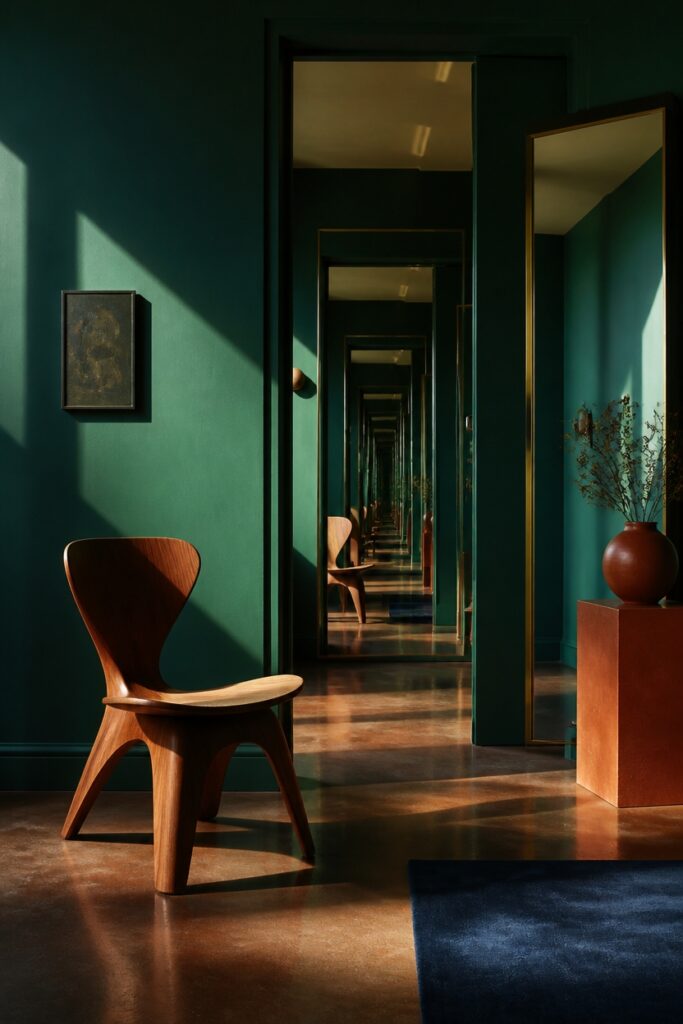
Colours, mirrors, lighting, and furniture placement each carry more weight than we often realise. Together they shape how a room breathes and how we respond to it emotionally. The interplay between these elements determines whether a space feels welcoming or cold, expansive or cramped.
Consider colour first. It sets the emotional temperature and can trick the eye into seeing more or less space than exists. Warm tones advance, cool tones recede, and the saturation level decides whether a wall becomes a backdrop or a statement.
Mirrors then amplify what colour begins, catching daylight and bouncing it into darker corners while visually doubling the room’s dimensions.
Lighting deserves attention as a layered practice rather than a single fixture overhead. Task lights focus the mind, ambient lights soften the edges of evening, and accent lights draw the eye toward objects worth noticing. Without this variety, even the most carefully chosen palette falls flat after sunset.
Furniture placement ultimately decides how life flows through a room. Paths should feel intuitive, conversation areas intimate but not cramped, and each piece should earn its position through both utility and visual balance.
When these four components speak to one another rather than compete, a space achieves that quality we recognise as cohesion without always being able to name it.
The Four-Element System: Why These Design Tools Work Together
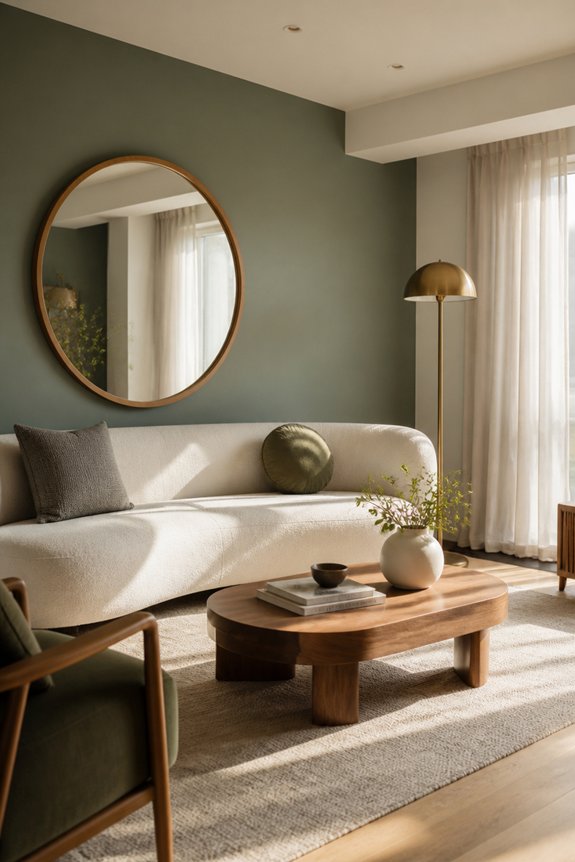
Interior design relies on four essential elements that work together to create functional, balanced spaces. Colours establish mood and visual flow throughout rooms. Mirrors reflect light and expand perceived space dimensions. Lighting illuminates areas, highlights features, and affects atmosphere quality. Furniture placement determines traffic patterns, functionality, and room balance.
These elements interact systematically. Warm colours pair with specific lighting types for maximum effect. Mirrors amplify natural and artificial light sources. Furniture positioning considers colour schemes and lighting placement. Each element influences the others, creating cohesive environments.
Professional designers understand these relationships and apply them strategically to achieve desired outcomes in residential and commercial settings.
Color: Choose Your Palette Based on Room Purpose and Light
Color selection forms the foundation of effective room design, working hand-in-hand with a space’s intended purpose and existing light conditions. Bedrooms benefit from calming hues like soft blues, greens, and warm neutrals that promote relaxation. Kitchens and offices function better with energizing colors such as warm whites, subtle yellows, or muted oranges.
Natural light sources affect color perception considerably: north-facing rooms require warmer tones to compensate for cool light, while south-facing spaces suit cooler palettes. Artificial lighting also influences selections, warm bulbs pair well with creams and warm grays, whereas cool-toned lighting complements blues and greens. Testing paint samples on walls before commitment prevents costly mistakes.
Mirrors: Place Them to Bounce Light Where You Need It Most
Strategic mirror placement amplifies natural and artificial light throughout a room, brightening dim corners and enhancing overall illumination. Positioning mirrors opposite windows reflects sunlight deeper into spaces, extending daylight benefits. Mirrors placed near light fixtures bounce artificial illumination around the room, reducing shadows and dark areas.
Consider placing mirrors on walls perpendicular to main light sources. Avoid positioning mirrors facing blank walls, as this wastes reflective potential. Large mirrors work effectively in narrow hallways, small rooms, and spaces lacking natural windows. Mirrors with metallic frames enhance light bouncing compared to plain glass. Strategic placement creates brighter, more spacious-feeling environments.
Lighting: Layer Three Types to Set Mood and Function
How does one create an environment that functions well during the day and feels comfortable at night? Layering three lighting types achieves this balance: ambient, task, and accent lighting.
Ambient lighting provides overall illumination, using ceiling fixtures or recessed lights to fill a room uniformly. Task lighting focuses on specific areas, such as desk lamps for reading or under-cabinet lights in kitchens. Accent lighting highlights architectural features or artwork, using wall sconces or track lighting.
Combining these three types allows spaces to adapt to different activities and times. Dimmer switches enhance flexibility, adjusting brightness as needed throughout the day.
Furniture: Arrange by Flow, Not by Wall
Most rooms benefit from furniture arrangement that prioritizes movement and activity patterns over proximity to walls. Floating furniture pieces away from walls creates conversation areas and defines spaces within larger rooms.
Sofas, chairs, and tables positioned toward room centers encourage natural traffic flow between entry points and functional zones. Walkways should remain clear, typically thirty-six inches wide minimum.
This approach works particularly well in living rooms, where seating arrangements promote interaction. Bedrooms benefit from nightstands placed beside beds rather than against walls, improving accessibility. Dining areas function best with tables positioned to allow comfortable passage on all sides, rather than pushed against perimeter walls.
Room-Specific Applications: Design Formulas for Bedrooms, Living Rooms, and Kitchens
Different rooms require tailored furniture arrangements that account for their specific functions, traffic patterns, and activities. Bedrooms benefit from positioning the bed as a focal point, away from doors and windows, with nightstands flanking each side. Living rooms work best with seating arranged to face entertainment centers or conversation areas, allowing clear sightlines.
Kitchens require placing appliances in efficient triangular formations, positioning islands for workflow and accessibility. Each arrangement considers natural traffic paths, door swings, and functional zones. Applying these formulas guarantees furniture placement supports daily activities, maximizes usable space, and maintains visual balance throughout different residential areas.
Five Changes You Can Make This Weekend Without Hiring a Designer
While the design formulas presented earlier provide structured guidance, homeowners can implement meaningful improvements through accessible modifications that require no professional assistance. Rearranging furniture to create better flow takes minimal effort. Adding mirrors opposite windows amplifies natural light throughout spaces. Swapping out lampshades or repositioning existing lamps improves ambiance.
Repainting accent walls with neutral or bold colors transforms room perception. Decluttering surfaces and organizing items reduces visual chaos. These five changes, furniture repositioning, mirror placement, lighting adjustments, wall color updates, and decluttering, produce noticeable results without expense or expertise, making weekend projects accessible to any homeowner seeking immediate interior improvements.
Frequently Asked Questions
How Do I Choose Between Warm and Cool Color Temperatures for Different Rooms?
One considers room function and desired atmosphere when selecting color temperatures. Warm tones (2700-3000K) suit relaxation spaces like bedrooms, while cool tones (4000-5000K) enhance focus in kitchens and offices. Personal preference ultimately determines the choice.
What’s the Best Way to Clean Mirrors to Maximize Their Light-Reflecting Effectiveness?
One should clean mirrors using a lint-free cloth and glass cleaner, wiping in circular motions to remove streaks and dust. Regular cleaning prevents buildup that diminishes reflectivity, ensuring mirrors effectively amplify available light throughout spaces.
Can I Use Furniture Placement to Improve Air Circulation and Ventilation Flow?
Yes, strategic furniture placement considerably improves air circulation. Positioning pieces away from walls and doorways allows air to flow freely. Avoiding blocking vents and windows, while maintaining open pathways, enhances ventilation throughout spaces effectively.
How Do Budget Constraints Affect Choosing Between Quality Lighting and Affordable Options?
Budget constraints force difficult trade-offs between lighting quality and cost. Affordable options often sacrifice energy efficiency and longevity, requiring frequent replacements. Quality lighting provides superior illumination and durability, justifying higher initial investment through long-term savings.
What Are Common Mistakes People Make When Combining Multiple Design Elements Together?
Like mixing paints without checking the palette, designers often clash competing elements by ignoring cohesion. Common mistakes include overwhelming spaces with too many colors, positioning furniture awkwardly with poor lighting coordination, and using mirrors that reflect unflattering angles rather than enhancing the room’s flow strategically.
Conclusion
These four design elements function as interconnected tools, each reinforcing the others’ effectiveness. Color establishes foundation, mirrors extend light’s reach, layered lighting activates mood, and strategic furniture placement enables movement. Together, they transform ordinary rooms into purposeful spaces. Implementation requires observing how each element responds to the others, adjusting placement and selection accordingly. Modest changes yield measurable improvements in comfort, functionality, and visual appeal without substantial investment or professional assistance.