
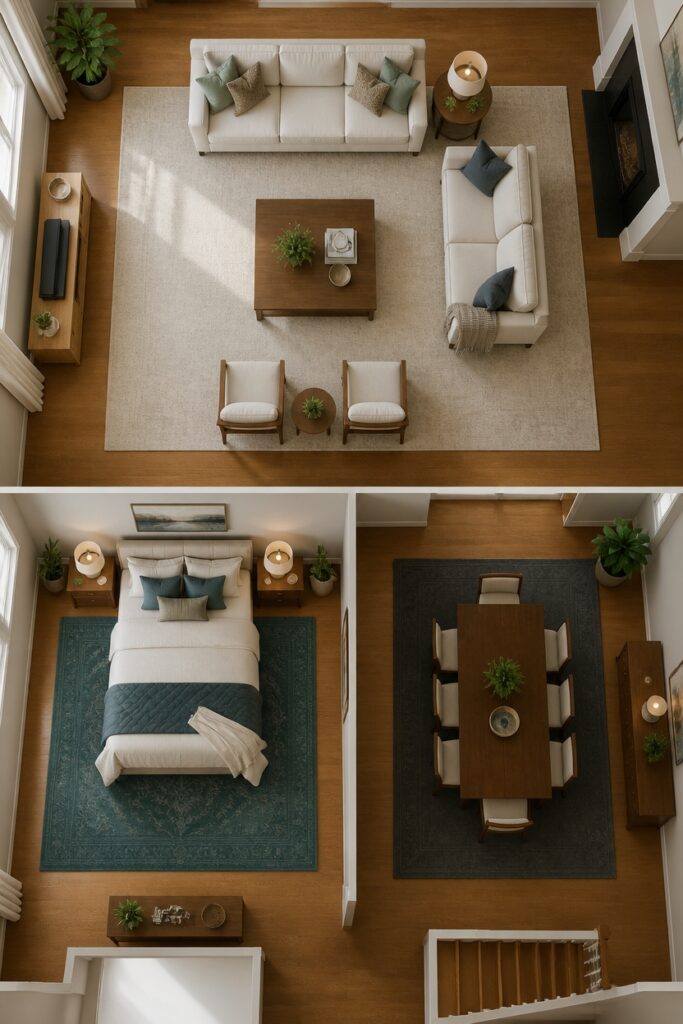
Finding the right rug size transforms how a room feels and functions. Living rooms benefit from generous dimensions that extend beneath sofas and chairs, creating a unified seating area.
Bedrooms call for soft landing zones on all sides of the bed, while dining rooms need rugs spacious enough to keep chair legs on fabric even when guests push back from the table.
Many homeowners underestimate how much a poorly sized rug disrupts visual harmony. Too small, and furniture appears to float disconnectedly. Too large, and the rug overwhelms the space.
Standard measurements exist for good reason, offering reliable starting points that prevent expensive missteps.
Beyond aesthetics, practical considerations matter equally. High-traffic areas demand durable materials in forgiving sizes, while cozy nooks allow for more experimental shapes.
Taking time to measure twice and visualize placement ensures each room achieves that effortless balance between comfort and style.
What Size Rug Works in Your Room: Standard Sizes Explained
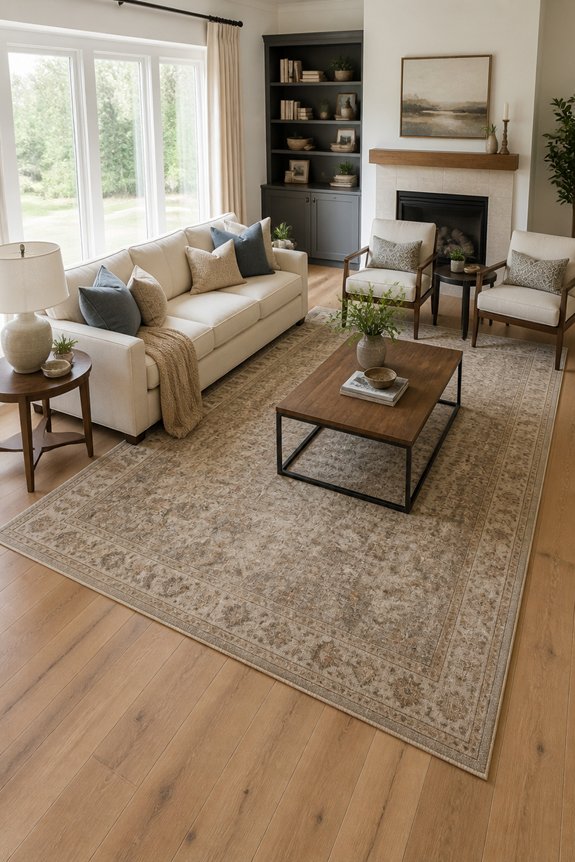
Three standard rug sizes dominate the market: 5×8 feet, 8×10 feet, and 9×12 feet. The 5×8 option works well in smaller bedrooms, apartments, or as accent pieces. The 8×10 size suits most living rooms, providing adequate coverage without overwhelming the space. The 9×12 dimension accommodates larger living areas and dining rooms effectively.
Room dimensions, furniture arrangement, and layout purpose determine the appropriate choice. A rug should anchor furniture groupings, with at least two legs of seating resting on its surface. Measuring the room first prevents purchasing incorrect sizes that appear too small or excessively large for the intended space.
Living Room Rug Sizing: Anchoring Your Seating Arrangement
Living rooms benefit from rugs that serve a specific function: anchoring furniture and defining the seating zone. An 8×10 rug typically accommodates a standard seating arrangement, positioning under the front legs of sofas and chairs. Smaller 5×8 rugs work in compact spaces, while larger 9×12 options suit open floor plans.
The rug should extend at least 18 inches beyond furniture on all sides, creating visual cohesion. For sectionals, positioning the rug perpendicular to the longest section anchors the arrangement effectively. Placement matters more than size; a properly positioned rug unifies disparate pieces into one functional seating area.
Bedroom Rug Placement: Creating Comfort Around Your Bed
Bedroom rugs typically anchor the bed and create a soft landing zone for feet upon waking. A standard approach places the rug under the bed, extending two to three feet on each side. This arrangement defines the sleeping area while providing comfort when stepping onto the floor.
Alternatively, rugs can be positioned at the foot of the bed, creating a visual accent without full coverage beneath the mattress. For smaller bedrooms, a compact runner rug alongside the bed serves practical purposes.
Consider rug dimensions relative to available floor space, bedroom layout, and furniture placement when selecting appropriate sizing.
Dining Room Rugs: Defining Your Table and Chairs
A dining room rug serves a different function than bedroom rugs, anchoring the table and seating area rather than providing comfort underfoot. The rug should extend at least 24 inches beyond the table’s edge, allowing chairs to remain on the rug when pulled out for dining.
A 9-by-12-foot rug typically accommodates standard rectangular tables with seating for six to eight people. Round tables work well with 8-foot round rugs or 9-by-12-foot rectangular options.
The rug material should resist stains and spills: polypropylene and wool blends offer durability. Proper sizing prevents the space from feeling cramped or disconnected.
Rug Placement: Wall-to-Wall or Partial Coverage
Two main placement strategies exist for rugs in living rooms and bedrooms: wall-to-wall coverage and partial floor coverage. Wall-to-wall rugs extend from one wall to another, creating unified, cohesive spaces that define entire rooms. Partial coverage rugs anchor specific furniture groupings, leaving exposed flooring around room perimeters.
Living rooms typically benefit from partial placement, where rugs ground seating areas and coffee tables. Bedrooms often use larger rugs positioned under beds, extending several feet on each side. Hallways and narrow spaces require long, slim rugs for practical functionality.
Room size, furniture arrangement, and aesthetic preference determine the most suitable placement strategy for individual spaces.
Measure Your Space Before You Buy
Proper measurements form the foundation for selecting appropriately sized rugs, regardless of whether one chooses wall-to-wall or partial coverage placement. Homeowners should measure room length, width, and note furniture placement before purchasing.
A living room measuring twelve by fifteen feet requires different sizing than a bedroom of nine by eleven feet. Using a measuring tape, record distances from walls to furniture edges. Document doorway locations and architectural features like fireplaces. These measurements allow accurate rug selection, preventing undersized or oversized purchases.
Sketch a simple room layout, marking dimensions and furniture positions. This documentation guarantees rugs fit intended spaces correctly.
5 Rug Sizing Mistakes That Shrink or Overwhelm a Room
Even after measuring carefully, homeowners often make critical errors when selecting rug sizes, leading to spaces that feel cramped or disproportionate.
Common mistakes include choosing rugs too small for the room, which makes furniture appear scattered and disconnected. Selecting oversized rugs can overwhelm compact spaces, leaving little floor visibility. Placing rugs at odd angles disrupts visual flow and balance.
Ignoring furniture placement when sizing creates awkward layouts where sofas sit partially on rugs. Finally, neglecting ceiling height and wall color coordination results in visual imbalance. Avoiding these five errors guarantees rooms maintain proper proportions and cohesive design through appropriate rug dimensions.
Frequently Asked Questions
How Do I Clean and Maintain My Rug Without Causing Shrinkage or Damage?
One should vacuum regularly using gentle settings and address spills promptly with mild detergent and cold water. Professional dry cleaning prevents shrinkage better than wet methods. Rotating the rug periodically guarantees even wear and fading. Avoid excessive moisture and direct sunlight exposure.
What Rug Materials Work Best for High-Traffic Rooms Like Living Rooms?
Picture footsteps traversing well-worn pathways across fabric fibers. Wool, polypropylene, and nylon emerge as superior choices, their dense weaves resisting crushing and fraying. These durable materials withstand constant activity while maintaining aesthetic appeal and longevity in demanding spaces.
Should I Use a Rug Pad, and What Type Is Most Effective?
Rug pads are essential for safety and protection. Non-slip rubber or felt pads prevent shifting and tripping hazards while protecting flooring underneath. Rubber pads work best on hard surfaces, while felt pads suit carpeted areas.
How Can I Make a Small Room Appear Larger With Rug Selection?
To make a small room appear larger, one should select light-colored rugs with minimal patterns. Larger rugs that extend toward walls create the illusion of expanded space, while low-pile textures maintain visual openness and airiness throughout the room.
What’s the Best Way to Layer Multiple Rugs in One Room?
Like a well-composed symphony, layering rugs requires harmony. One should place a larger foundational rug first, then anchor a smaller, contrasting rug atop it, ensuring proper alignment. This technique adds depth, defines spaces, and creates visual interest within a room.
Conclusion
Selecting the right rug size is fundamental to room design, much like a foundation supports a building. Proper measurements in living rooms, bedrooms, and dining areas create visual balance and functional comfort. An 8×10 living room rug anchors furniture; bedroom rugs extend 2-3 feet beyond beds; dining rugs reach 24 inches past table edges. Measuring before purchasing prevents costly mistakes, ensuring rugs enhance rather than diminish your space.