
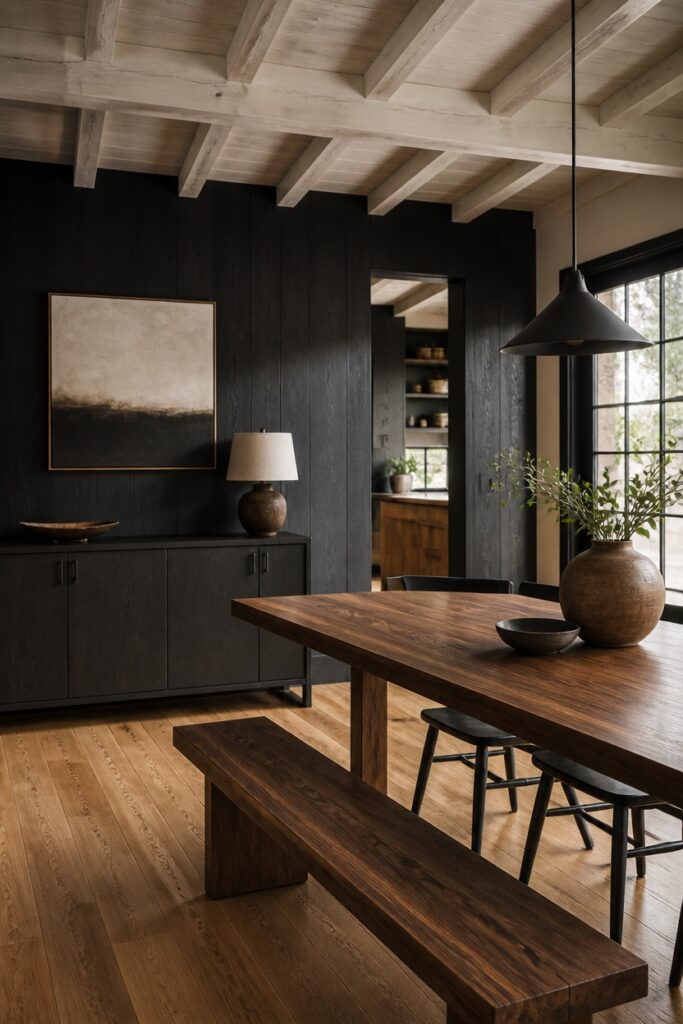
Matte, satin, and gloss finishes each tell a different visual story when applied to timber surfaces. The way light plays across these surfaces can completely shift the mood of a room. Understanding this interaction becomes essential before mixing finishes within one space.
Room function should guide your initial decisions. A busy kitchen might benefit from practical satin cabinets paired with a subtle matte island. Bedrooms often welcome softer sheens that absorb rather than reflect harsh morning light. Existing wood tones in flooring or architectural features must also factor into the equation, as warm oak behaves differently under gloss than cool walnut.
Lighting conditions reveal why complementary selection matters so much. Natural daylight exposes every inconsistency in finish choices, while artificial lighting can either flatten or exaggerate contrasts. Selecting finishes that share undertones prevents the jarring, disjointed appearance that occurs when competing surfaces fight for attention.
Several pitfalls trip up even careful planners. Applying high-gloss trim against matte walls without transition can feel accidental rather than intentional. Overlooking how adjacent rooms flow together creates visual whiplash in open floor plans.
Testing samples in your actual space, viewed from multiple angles throughout the day, remains the only reliable method for catching these issues before commitment.
The Three Finishes You Need to Know: Matte, Satin, and Gloss
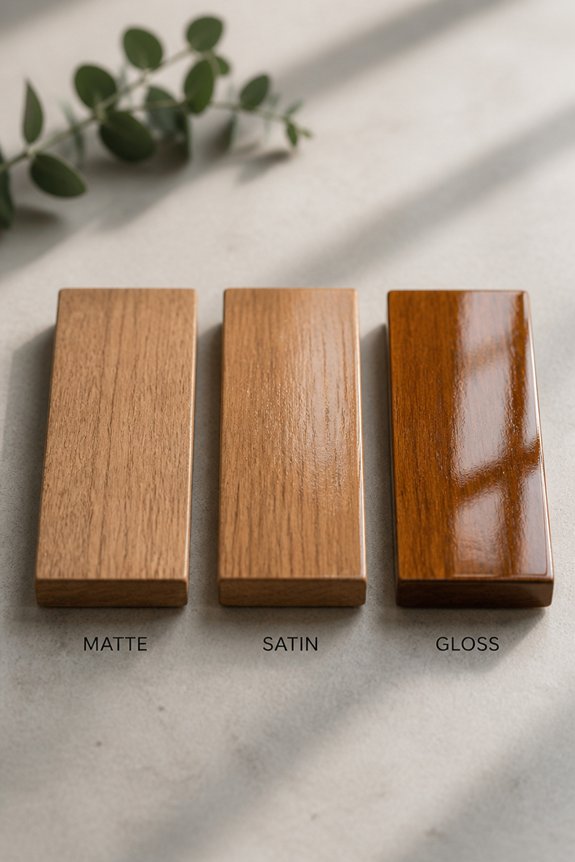
When selecting a timber finish, understanding the three primary options—matte, satin, and gloss, determines both the appearance and performance of a wood surface.
Matte finishes absorb light, producing a flat appearance suitable for hiding surface imperfections on items like cabinets and furniture. Satin finishes reflect moderate light, offering a subtle sheen that balances durability with aesthetics on floors and doors. Gloss finishes reflect significant light, creating a shiny, reflective surface that enhances color depth on trim and decorative pieces.
Each finish demonstrates different durability levels, maintenance requirements, and resistance to moisture and scratches, influencing long-term performance and upkeep demands.
Choose Finishes Based on Room Function and Lighting Conditions
How does one select the appropriate timber finish for a specific space? Room function and lighting conditions directly influence finish choice.
High-traffic areas like kitchens and bathrooms benefit from gloss or satin finishes, which resist moisture and wear effectively. Living rooms and bedrooms tolerate matte finishes, offering softer appearances.
Lighting matters greatly: bright rooms suit matte finishes without glare, while dimly lit spaces benefit from satin or gloss, which reflect available light. Consider: kitchen cabinets perform better with satin, bathroom vanities require gloss durability, and bedroom furniture works well with matte. Matching finish to function guarantees longevity and aesthetic success.
Create Visual Hierarchy With Strategic Finish Contrasts
Beyond matching finishes to room function, designers employ finish contrasts to guide the eye and establish visual interest throughout a space. Strategic contrasts direct attention to focal points, such as a matte walnut feature wall against glossy maple cabinetry. Combining satin and high-gloss finishes on adjacent surfaces creates depth without overwhelming the room.
Lighter finishes on upper cabinets, darker finishes below, establish visual balance. Mixing natural oil finishes with polyurethane coatings adds textural variety. These deliberate choices prevent monotony while maintaining cohesion. Effective contrast requires considering wood species, sheen levels, and placement to achieve functional visual organization.
Match Wood Grain and Color Across Different Timber Finishes
Consistency in wood grain and color presentation demands careful attention across surfaces receiving different finish types. Wood species selection determines baseline appearance, whether selecting oak, walnut, or maple for projects. Stain applications should match tone and depth across all components, preventing mismatched visual effects.
Clear coats, whether polyurethane or wax-based, affect color perception differently, requiring test samples on actual wood pieces. Different finish types, glossy, matte, satin, alter how light reflects grain patterns, creating apparent color variations. Applying identical stain before varied topcoats preserves grain consistency. Sample applications on scrap wood from the same batch guarantee color matching before finishing primary surfaces.
Specialty Finishes: When to Use Whitewash and Stain
While matching finishes across wood surfaces requires careful planning, whitewash and stain serve different purposes and work best in specific situations. Whitewash creates a semi-transparent, chalky appearance suitable for rustic or farmhouse aesthetics, working well on exterior wood like fences and barn doors.
Stain penetrates deeper, enhancing natural wood grain while providing color, making it ideal for interior furniture and trim where grain visibility matters. Choose whitewash for surfaces needing a lighter, aged look with minimal grain show. Select stain for projects emphasizing wood character and warmth.
Both require compatible base preparation and topcoats to guarantee successful application and durability across mixed timber projects.
Mix Finishes Successfully in Kitchens, Living Rooms, and Bedrooms
Room function determines which timber finishes work best and where they should be applied. Kitchens require durable, moisture-resistant finishes like polyurethane or conversion varnish, protecting surfaces from water and heat exposure. Living rooms tolerate varied finishes, including matte stains and semi-gloss coatings, balancing aesthetics with moderate durability demands.
Bedrooms benefit from softer finishes such as matte or satin stains, creating calm environments while minimizing maintenance. Mixing finishes across rooms maintains visual coherence when using complementary colors and sheen levels. High-traffic areas need protective topcoats, while low-use spaces allow lighter applications. Strategic finish selection based on room purpose guarantees longevity and appropriate appearance throughout homes.
Avoid These 5 Finish-Mixing Mistakes
When combining multiple timber finishes throughout a home, certain errors commonly undermine the final result. First, mixing too many finishes creates visual chaos, overwhelming spaces rather than enhancing them. Second, ignoring undertones causes clashing colors, like pairing warm oak with cool walnut stains. Third, applying inconsistent sheens produces jarring reflections across rooms.
Fourth, neglecting wood species compatibility results in finishes that perform differently on various timber types. Fifth, failing to test samples before committing leads to expensive corrections. Homeowners should limit finishes to two or three complementary options, maintaining cohesion throughout adjoining areas while ensuring each finish suits its specific application and wood base.
Frequently Asked Questions
How Long Does Each Timber Finish Type Typically Last Before Requiring Reapplication?
Oil finishes typically require reapplication every 1-2 years. Varnish lasts 3-5 years, while polyurethane extends to 5-7 years. Lacquer finishes endure 2-3 years. Wax necessitates annual maintenance. Environmental conditions and usage greatly affect longevity across all finish types.
What Is the Cost Difference Between Matte, Satin, and Gloss Finishes for Timber?
Matte finishes typically cost 10-15% less than satin options, which are moderately priced. Gloss finishes command the highest price, costing 20-30% more than matte due to enhanced durability and aesthetic appeal demands.
Can I Apply a Glossy Finish Over an Existing Matte Finish Without Sanding?
While one might assume surface preparation is unnecessary, applying glossy finish over matte without sanding will likely result in poor adhesion and uneven appearance. Proper sanding is essential for successful finish application, ensuring durability and professional results.
Which Timber Finish Is Most Durable for High-Traffic Areas Like Hallways?
Polyurethane finishes offer superior durability for high-traffic hallways. They provide excellent wear resistance, scratch protection, and maintain appearance longer than alternatives. Oil-based polyurethane outperforms water-based varieties in longevity, though water-based options dry faster and emit fewer fumes.
How Do I Remove or Strip an Existing Finish Before Applying a New One?
Stripping successfully starts by selecting suitable solvents or sanders. One should soak surfaces with chemical stripper, scrape away softened finish, then sand smooth. Alternatively, power sanding provides proper preparation. Finally, thoroughly clean debris before applying new finish.
Conclusion
Successful timber finish combinations require thoughtful selection, careful testing, and strategic application. Matching sheen levels prevents visual chaos, while coordinating wood tones guarantees cohesion. Understanding room function guides finish choices; kitchens benefit from durable gloss, living rooms from balanced satin, bedrooms from subtle matte. Avoiding common mistakes—mismatched undertones, inconsistent grain appearance, poor lighting consideration—creates harmonious spaces. Combining finishes demands precision, planning, and patience to achieve professional results.